
A Compact Work Area at Home
A small home office is a dedicated work zone inside your home, even if it is only part of a room. It gives you one place for focused work, calls, paperwork, or creative tasks.
Choose your cookie settings
We use necessary cookies for sign-in, security, and features you choose. Analytics, marketing services, and proactive third-party sign-in prompts that use browser identifiers load only after you consent; authentication services may load immediately when you choose to sign in. View the Cookie Policy
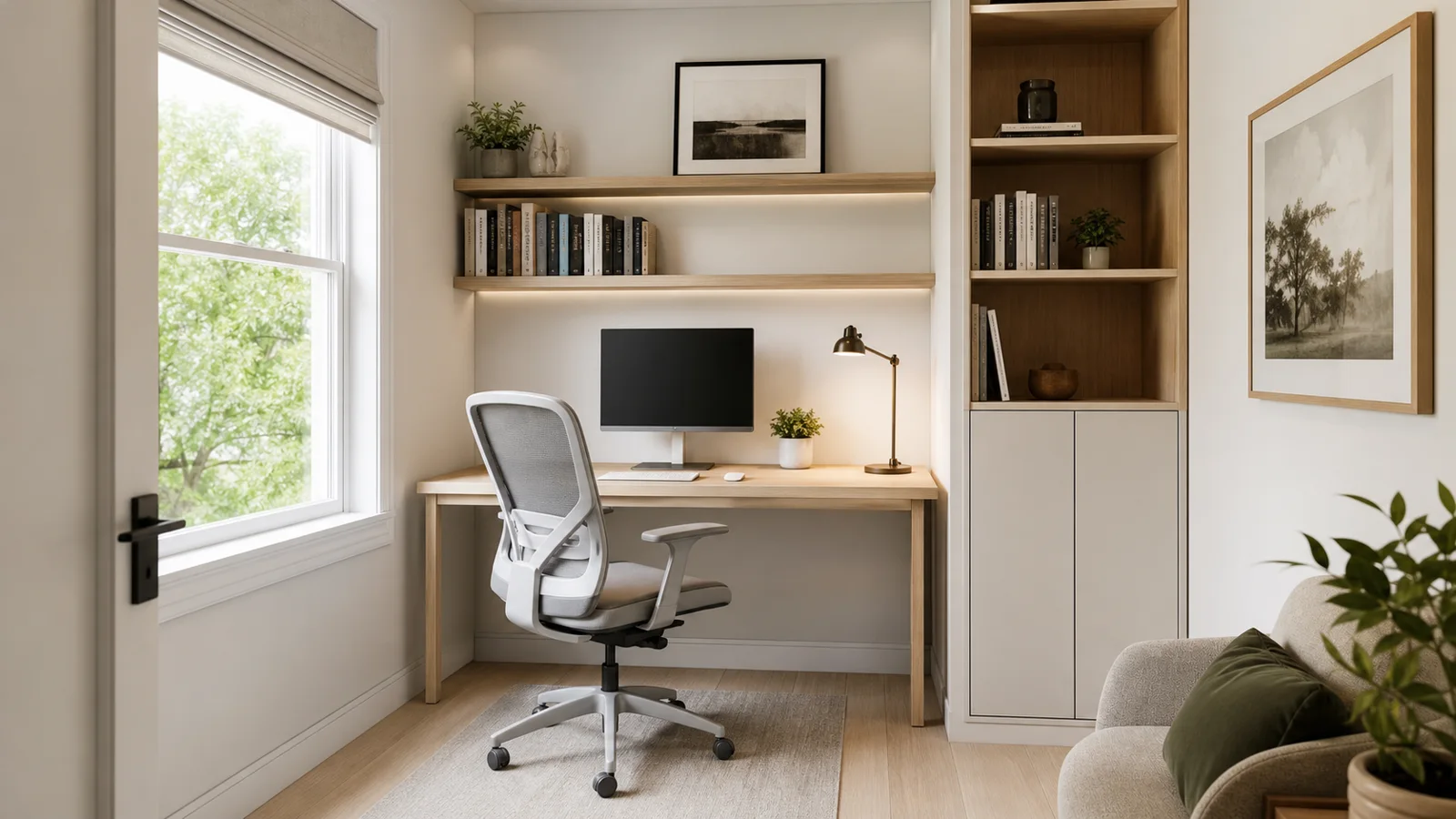
Upload a small office, nook, closet, or bedroom corner photo. ArchOne AI helps you test small home office ideas for desk placement, vertical storage, cable hiding, printer zones, lighting, and a cleaner video-call background while keeping the room's real constraints in view.
A small home office is a dedicated work zone inside a home. It may be a full room or a compact part of another room, but it should support focused work, storage, lighting, power access, and video calls better than a temporary laptop spot.
A small home office is a dedicated work zone inside your home, even if it is only part of a room. It gives you one place for focused work, calls, paperwork, or creative tasks.
It can be a bedroom corner, closet office, guest room, hallway niche, apartment nook, or spare-room wall when the desk and chair path still work.
The space should support a usable desk surface, chair pull-back, outlets, lighting, storage, and a screen position that avoids glare.
A dining table or sofa can work for a short session, but a small home office should stay organized enough for repeated workdays and video calls.

Basic small home office requirements
Use these small home office ideas to compare the decisions that matter in a small room: where the desk sits, how the chair moves, whether windows cause glare, where storage fits, and when a closet, bedroom corner, or shared wall setup makes sense.

Best when the monitor can sit perpendicular to the window, with side daylight, shade control, and enough chair pull-back space behind the desk.

Best for narrow rooms or multipurpose spaces when a shallow worktop, tucked chair, and open walking path matter more than a deep executive desk.

Best when a reach-in closet has enough desk depth, knee space, outlet access, task lighting, and a clear door or curtain opening.

Best when the desk can create a quiet work zone while keeping the bed path, closet access, door swing, and chair movement clear.

Best when a long worktop gives both users clear chair pull-back space, shared cable control, nearby outlets, and vertical storage without blocking the main path.
Start with the pain point you notice first: piles on the desk, not enough work surface, a messy call background, or weak task lighting. These small home office ideas show what to test before you generate options from your own photo.
Choose color, contrast, and lighting cues that make a compact office look calmer in person and cleaner on camera. These small home office ideas help guide what you ask ArchOne AI to change or preserve.
Use these small home office ideas to check the layout details that make a compact office succeed or fail: chair clearance, desk depth, lighting, cable paths, storage access, and the background people see on calls.
Compare compact office and bedroom ideas where desks, storage, lighting, and flexible room use overlap.

For desk placement, storage, task lighting, call backgrounds, and focus-friendly room layouts.

For compact bedrooms where bed placement, wardrobes, lighting, and hidden storage matter most.

For bed wall, closet, lighting, color, textile, and layout ideas in private rooms.

For seating, focal walls, media storage, rug sizing, lighting, and open-plan living spaces.
Still have questions? Contact us.
A small home office is any compact work area at home, such as a spare room, apartment corner, closet office, alcove, guest room, or bedroom desk zone. The best small home office ideas do more than fit a desk; they create enough surface area, chair movement, storage, lighting, and privacy to work comfortably.
The most useful small home office ideas start with the desk location, then check the chair path, window glare, outlets, storage, and video-call background. A good small-space setup usually uses a compact desk, vertical or closed storage, controlled lighting, and a clear route to doors, closets, beds, or guest room furniture.
Good small home office ideas usually place the desk beside a window or along a short wall where daylight comes from the side. Try to keep the monitor perpendicular to the window when possible, so natural light helps the room without putting bright glare directly in front of or behind the screen.
For small home office ideas that work in real rooms, arrange the largest pieces first: desk, chair, storage, and any guest room or bedroom furniture that must stay. Bedroom office ideas need extra care because the chair, closet doors, drawers, and bed path all compete for the same floor space.
A small home office can be very compact if it has the basics: a usable desk surface, comfortable chair movement, safe access to doors or closets, and storage for daily tools. Instead of judging by square footage alone, check whether the chair can pull back, the monitor sits at a workable distance, and the room still has a clear path.
The strongest small home office storage ideas use vertical storage, closed lower cabinets, cable trays, wall shelves, and furniture that fits the actual chair path. Hide printer and router gear in ventilated storage, keep daily items within reach, and leave some open floor area so the room feels usable instead of packed.
Good small home office ideas keep decoration useful and calm. Choose a light or low-contrast base, add one controlled accent, use closed storage to reduce visual clutter, and create a simple camera-facing wall with art, books, or shelves. Decor should support focus, storage, lighting, and video calls, not just fill the room.
Small home office ideas that make a room look bigger usually use warm whites or soft neutrals, lighter upper walls, pale wood, shallow furniture, and storage that lifts items off the floor. A clean cable plan, a tucked chair, filtered daylight, and fewer visible piles can make a compact office feel brighter and less crowded.
Yes. Upload a room, nook, closet, alcove, bedroom corner, or guest room photo to ArchOne AI, then describe what should stay and what should change. Closet office ideas work best when you also note shelf height, outlet access, chair clearance, and whether the doors should remain usable. ArchOne AI can turn small home office ideas into early visual concepts for desk placement, storage depth, lighting, cable routes, printer hiding, and call backgrounds, but not measured drawings, electrical plans, accessibility reviews, or construction documents.
Last updated: September 16, 2026

Upload a room, nook, closet, or bedroom corner photo and turn small home office ideas into layout concepts for smarter desk placement, storage, lighting, cable control, and call backgrounds before you commit to furniture or built-ins.
Browse small home office design ideas for window desks, wall-mounted work zones, closet offices, guest room corners, hidden printers, cleaner cables, better call backgrounds, and shared desks. Use these small home office layout ideas and small home office storage ideas to choose what to test in your own room photo.

Full-height storage works best when lower cabinets hide files and printer gear, shallow shelves keep daily tools reachable, and outlets, ventilation, and cable routes stay accessible.

A compact desk zone works when the surface is deep enough for the monitor and keyboard, the chair can pull back comfortably, and the door, bed, or guest path stays open.

Better calls need controlled light, not just more light: avoid bright windows behind you, soften side daylight, angle task lamps away from the screen, and keep the background calm.

Use a soft, low-contrast base with warm whites, pale wood, light fabric, and filtered daylight so the room feels brighter without harsh edges or screen glare.

Anchor storage with darker lower cabinets, muted accents, or black hardware while keeping the desktop, upper wall, and camera-facing area lighter.

Layer ambient light, side daylight, an adjustable task lamp, and soft background light while avoiding bright windows behind you or lamp glare on the screen.