

Medium Laundry Room
40-80 sq ft / 4-7.5 sq m
Choose laundry room ideas that fit side-by-side machines, cabinet storage, a folding counter, and door swing without crowding the main work path.
Choose your cookie settings
We use necessary cookies for sign-in, security, and features you choose. Analytics, marketing services, and proactive third-party sign-in prompts that use browser identifiers load only after you consent; authentication services may load immediately when you choose to sign in. View the Cookie Policy
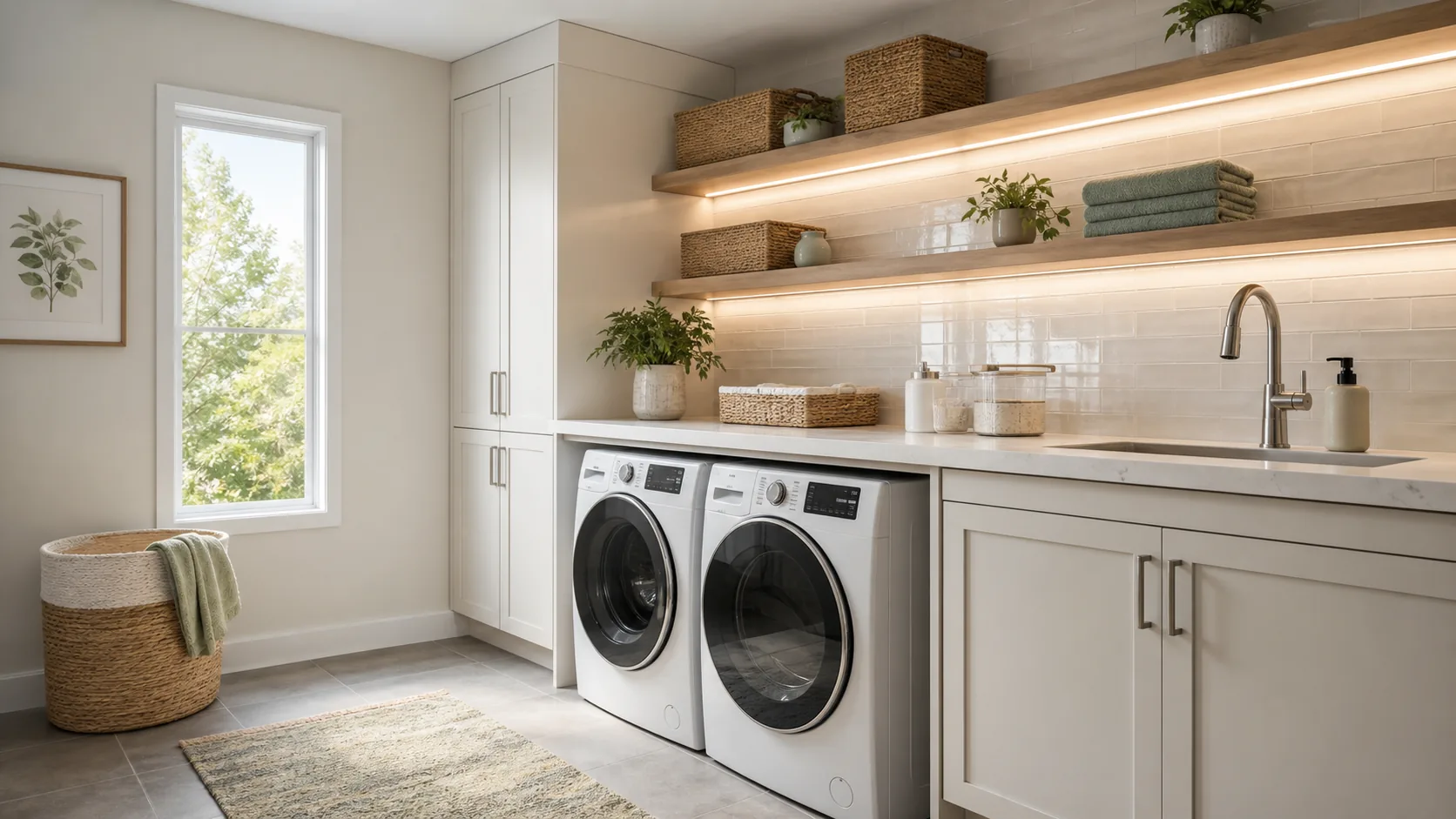
Find laundry room ideas for washer dryer layouts, hidden storage, folding counters, sinks, drying rails, tile, color, and lighting. Use these laundry room ideas to narrow what should stay, what should change, and what to test around your real appliances and space.
Match laundry room ideas to your actual room size before choosing finishes. Compare small, medium, and large layouts for appliance placement, storage, sinks, folding counters, hanging space, and door clearance, then keep only the laundry room ideas your room can realistically support.

Under 40 sq ft / under 4 sq m
Use compact or stacked laundry room ideas that keep machine doors usable, protect a clear floor zone, and move cabinets, hampers, and drying space upward.
Explore Small Laundry Room Ideas40-80 sq ft / 4-7.5 sq m
Choose laundry room ideas that fit side-by-side machines, cabinet storage, a folding counter, and door swing without crowding the main work path.

80+ sq ft / 7.5+ sq m
Look for laundry room ideas that connect machines, sink, mudroom storage, drying rails, and folding zones without spreading daily tasks too far apart.
Use these laundry room styles to choose a cabinet look, tile direction, color mood, hardware finish, shelving, and drying detail. Then apply the style to your real washer dryer layout when generating a concept.


Use these checks before you choose or generate a laundry room concept. The best laundry room ideas should fit your washer dryer, protect door swing and venting, store daily supplies, and make sorting, cleaning, and folding easier.
Compare nearby utility and entry spaces that often share machines, baskets, hooks, shoe storage, pets, and garage traffic.

For tight laundry spaces that also handle baskets, cleaning supplies, pet items, or garage traffic.

For garage entries, shoe zones, hooks, benches, lockers, wet gear, and daily drop-zone storage.

For front-door storage, benches, mirrors, rugs, lighting, and a clearer first impression.

For narrow entries that need compact benches, hooks, shoe storage, and a clear walking route.
Still have questions? Contact us.
Start with the machine layout, not the decor. The best small-space laundry room ideas usually use stacked or compact machines, vertical cabinets, wall shelves, pull-out hampers, fold-away drying racks, and light finishes. Keep a clear floor zone in front of the washer and dryer so doors, baskets, and people do not compete for the same space.
Use stacked machines when floor space is tight or when you need room for a sink, cabinet, or folding counter beside them. Use side-by-side machines when you want a continuous counter above them or easier front access. In both cases, check appliance manuals, door swing, hookups, dryer vent path, and service access before planning cabinets.
Start with what has to live in the room: detergent, stain tools, cleaning products, extra paper goods, linens, hampers, and seasonal supplies. The best laundry room storage ideas usually mix closed cabinets for visual clutter with open shelves, baskets, or pull-outs for items you use every week. Put daily supplies near the machine, sink, or counter where they are used.
A folding counter is not required, but it makes the room much easier to use if space allows. It can sit above side-by-side machines, beside a stacked pair, or near hampers and storage. Prioritize appliance clearance first, then add as much counter depth as the room can comfortably support without blocking the main path.
No, but a utility sink is helpful for soaking stained items, rinsing cleaning tools, handwashing delicates, pet cleanup, and messy household tasks. If the room is small, compare the sink against what it may replace: folding counter, cabinet storage, or walking space. Add a sink only when the workflow and plumbing make sense.
Choose durable, moisture-resistant flooring that can handle water, detergent, baskets, shoes, and frequent cleaning. Porcelain tile is a common choice because it is hard-wearing and works with many styles. Also check slip resistance, grout maintenance, subfloor conditions, and how the floor meets adjacent rooms.
Warm white, soft sage, blue gray, greige, and charcoal can all work. For most laundry rooms, keep the largest surfaces calm, then use cabinet color, floor tile, metal finishes, baskets, or wood shelves for character. If the room is small or windowless, lighter walls and clear task lighting usually matter more than a bold color.
Separate wet laundry tasks from entry storage. Keep washer and dryer access clear, then add a bench, hooks, shoe storage, hampers, and durable flooring where people enter. Use closed cabinets for cleaning supplies and open cubbies or baskets for daily items. Mudroom laundry combos work best when drop-zone clutter does not block the machines.
Yes. Upload a laundry room photo, sketch, render, or reference image. Choose Laundry Room, pick a design direction, and add notes about what should stay, such as washer dryer location, windows, doors, floor, or plumbing. Then turn your favorite laundry room ideas into a clear prompt for storage, a new counter, sink, drying rail, color palette, tile, lighting, or mudroom storage.
No. AI laundry room images are useful for early visual exploration, style comparison, and explaining ideas before a remodel. Final dimensions, plumbing, electrical work, dryer venting, waterproofing, accessibility, permits, material specifications, and installation details should be reviewed by qualified professionals.
Last updated: July 8, 2026

Upload a laundry room photo, choose a design direction, and add notes about what should stay or change. Turn laundry room ideas into visual concepts for washer dryer layout, cabinets, folding space, sink ideas, finishes, color, and lighting before you remodel.
Compare laundry room ideas for washer dryer placement, closed cabinets, mudroom storage, utility sinks, drying rails, folding counters, tile, color, and lighting. Use these laundry room storage ideas, laundry room organization ideas, and laundry room decor ideas to decide what fits your room before generating a concept from your own photo.
Use these laundry room measurements to keep laundry room ideas realistic before you generate or choose a concept. Check washer dryer fit, door swing, walking space, folding counter depth, hanging height, and service access around the machines.
Use these as visual planning references, not construction dimensions.

Use these laundry room color ideas to make the space feel cleaner, brighter, or more finished. The best laundry room ideas choose a cabinet or wall tone first, then balance it with floor tile, counter material, metal finishes, lighting, and small accents before generating a concept.
Recommended Palettes
Create a Palette
Choose one starting color.
Suggested Visual Balance
Why this works
Warm white carries the cabinets and walls, while greige tile and light oak add practical softness around the washer dryer.
Use laundry room material ideas that can handle water, cleaning, closed storage, and daily wear. Strong laundry room ideas start with durable floor tile, cabinet fronts, counter surfaces, backsplash tile, or a utility sink, then pair them with simpler finishes and hardware before generating a concept.
Pick one main material, then see which quiet materials and accent details pair well with it.
Choose the surface or finish people notice first.


These calm the room and support the main material.


Use these in small doses for warmth, contrast, or rhythm.


Use these laundry room lighting layers to make sorting, stain checks, folding, soaking, shelves, and washer dryer controls easier to see. Practical laundry room ideas start with clear task lighting and good color visibility, then add ambient, accent, and decorative fixtures before generating a concept.
Use the four lighting layers to judge what each fixture should do, then combine them so the laundry room works during daily chores and still feels finished.

Use ambient lighting as the even base layer so machines, cabinets, walkways, and doors stay readable without harsh shadow pockets.
Keep machines, cabinets, and walking paths evenly lit
Avoid relying on one dim center fixture
Use dimming when the laundry room also works as a mudroom or hall

Task lighting should clearly reach the folding counter, utility sink, washer dryer controls, labels, and stain-check areas.
Use under-cabinet light where uppers shade the counter
Keep shadows off the folding and sorting surface
Light the sink and machine controls clearly

Accent lighting adds depth by highlighting selected shelves, backsplash tile, glass cabinets, or a drying rail wall after the main task lighting is solved.
Highlight one or two features instead of every shelf
Use accent light after the main task lighting is solved
Good targets include backsplash tile, open shelves, and glass cabinet fronts

Decorative lighting gives the laundry room a style note, but it should not replace clear work light or create glare on glossy machines and tile.
Use one pendant, flush mount, or sconce as a style note
Check glare near glossy machines and tile
Let the fixture support the cabinet and hardware style