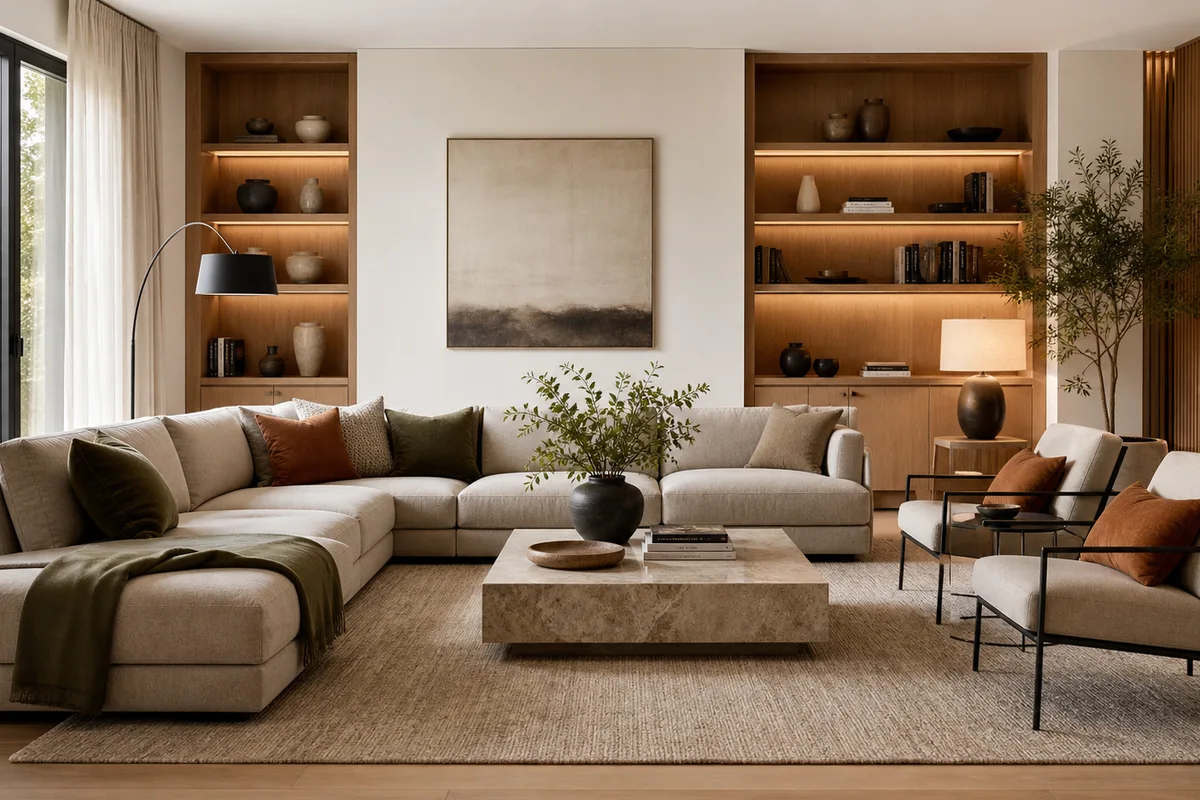
Warm living room with layered seating, soft lighting, and a calm material palette

Interior Design Ideas That Fit Your Room

Start with the room you want to improve. Browse 30 interior design ideas by room, style, common problem, and design rule, then choose a clearer direction for your space.

7 Interior Design Ideas
by Room

Start with the room you want to improve. These interior design ideas help you compare layout, lighting, storage, and material decisions by space.

8 Interior Design Ideas
by Style Direction

Pick a style direction after you choose the room. These interior design style ideas help you compare mood, materials, color, and lighting.

Modern interior with clean-lined furniture, smooth surfaces, and a restrained material palette

Modern

Minimalist interior with simple furniture, open floor space, and very little visual clutter

Minimalist

Japandi interior with low furniture, warm wood, natural texture, and a quiet neutral palette

Japandi

Scandinavian interior with bright walls, pale wood, simple textiles, and relaxed furniture

Scandinavian

Modern farmhouse interior with warm wood, painted surfaces, soft textiles, and black accents

Modern Farmhouse

Soft luxury interior with refined finishes, layered lighting, and a polished neutral palette

Soft Luxury

Organic modern interior with curved forms, warm neutrals, natural texture, and soft contrast

Organic Modern

Coastal interior with light colors, relaxed woven textures, and an airy room composition

Coastal

6 Interior Design Ideas
for Room Problems

A new style cannot fix every room issue. Use these cards to spot common interior design problems before choosing the right room idea.

The Layout Feels Awkward

Awkward rooms usually need clearer movement and better-scaled furniture before a new style.

Start by adjusting

Fix circulation
Resize furniture
Clarify activity zones

The Room Feels Dark

A dark room often needs better light strategy, not just brighter furniture.

Start by adjusting

Brighter wall tone
Layered lighting
Reflective surfaces

There Is No Focal Point

A scattered room feels calmer when one wall, view, or furniture group leads the eye.

Start by adjusting

Choose one anchor
Strengthen a feature wall
Reduce visual competition

The Finishes Feel Outdated

Outdated rooms often improve fastest through material tone, texture, and hardware.

Start by adjusting

Update material palette
Simplify color contrast
Refresh hardware or texture

Storage Is Not Working

Storage problems show up as clutter, crowded surfaces, and daily items with no home.

Start by adjusting

Closed storage
Vertical shelving
Better drop zones

5 Design Rules
to Check Each Idea

A good interior design idea should still work in the real room. Check function, scale, balance, focal point, and lighting before using a reference.

01

Start With Function and Flow

Decide what the room must support first, then keep the main walking paths, door swings, seating access, and work zones easy to read.

02

Match Scale and Proportion

Choose furniture, rugs, lighting, art, and storage that fit the room size and relate well to each other. This prevents cramped or underfilled rooms.

03

Balance Visual Weight

Distribute heavy forms, dark colors, tall storage, texture, and empty space so one side of the room does not feel overloaded.

04

Set One Clear Focal Point

Let one wall, view, bed, sofa group, island, fireplace, artwork, or lighting feature lead the room so the eye has somewhere to land.

05

Layer Light, Color, and Materials

Use lighting, color, wood, stone, tile, fabric, metal, and texture as one system. A strong palette feels intentional in daylight and at night.

Interior Design Ideas FAQ

Still have questions? Contact us.

Start with the room and how it needs to work, not with a style name. The best interior design ideas usually begin with layout, lighting, storage, furniture scale, materials, or the lack of a focal point.


Choose a style after you understand the room and the main improvement goal. Strong interior design ideas use style to guide mood, materials, color palette, furniture density, and lighting.


Use fewer large pieces, clearer walking paths, lighter visual weight, smarter storage, and layered lighting. Small-room interior design ideas work best when scale and clutter are solved before adding more decor.


Look beyond brighter furniture. Try lighter wall tones, reflective surfaces, softer window treatments, and layered ambient, task, and accent lighting so the room works in daylight and at night.


No. Copy the interior design logic instead: mood, color palette, materials, lighting, focal point, and furniture density. Then adapt those ideas to your real walls, windows, floor, layout, and room constraints.


Mention the room type, what you want to improve, the style direction, and what should stay unchanged. For example: keep the windows and floor, reduce visual clutter, add warmer lighting, and explore Japandi bedroom interior design ideas.


Yes. Upload a room photo, sketch, render, or reference image to ArchOne AI. Choose the room type and interior style, then add notes about layout, lighting, storage, materials, and anything that should remain recognizable.


No. AI is useful for early visualization, style comparison, and client discussion. Final measurements, sourcing, budgets, code compliance, accessibility, safety, and implementation decisions still need professional review.


Warm living room concept generated from an interior design idea direction

Try These Ideas on Your Own Room

Upload a room photo and choose one of these interior design ideas as your direction. ArchOne AI helps you turn it into visual interior concepts for your real space.