

Standard Bedroom
100-160 sq ft / 9.3-14.9 sq m
Plan around a full or queen bed, usable nightstands, dresser clearance, a medium rug, and balanced lighting. Check that larger beds do not crowd storage or circulation.
Choose your cookie settings
We use necessary cookies for sign-in, security, and features you choose. Analytics, marketing services, and proactive third-party sign-in prompts that use browser identifiers load only after you consent; authentication services may load immediately when you choose to sign in. View the Cookie Policy
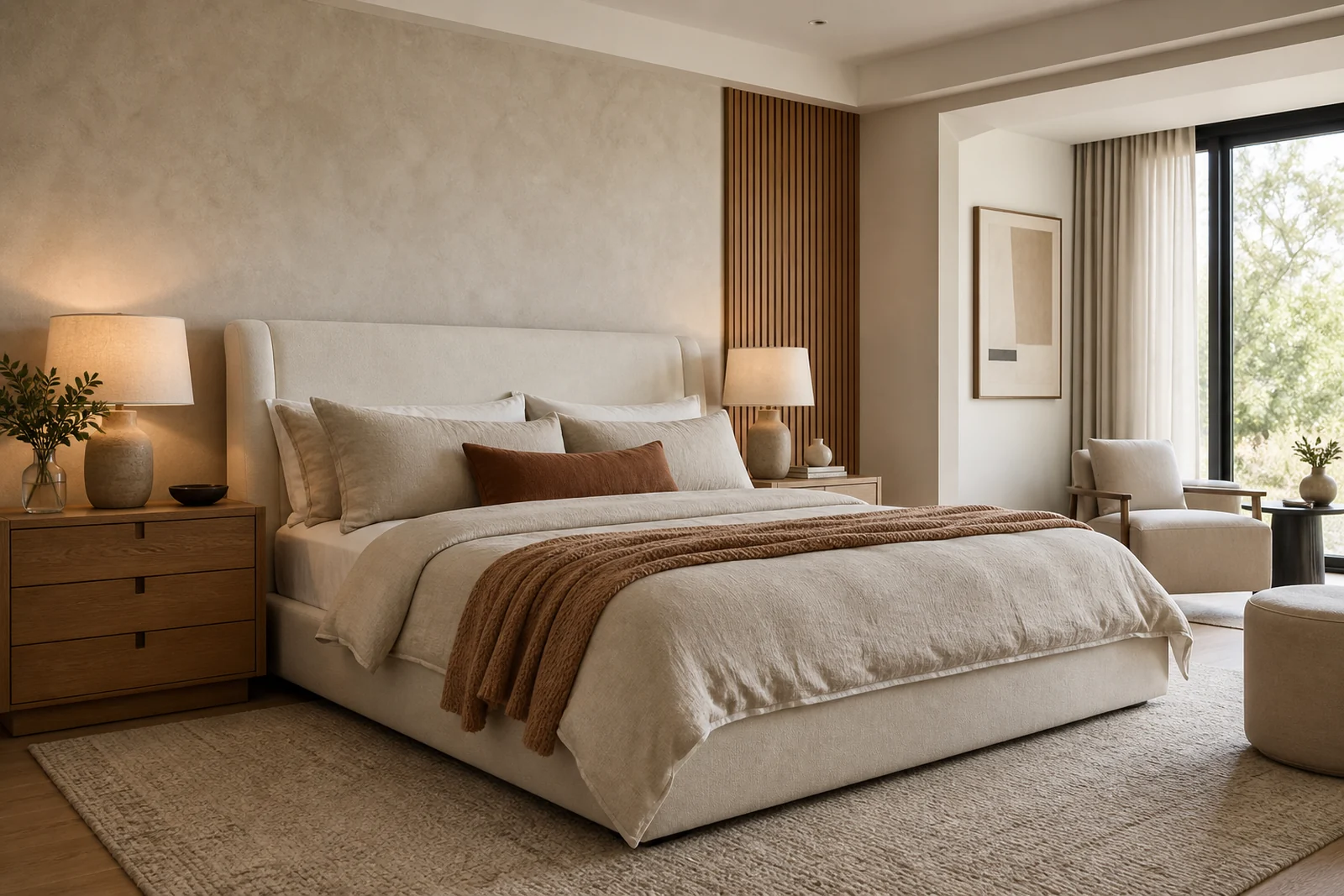
Explore bedroom layouts, storage, lighting, color, and material directions. Compare those ideas against your own room with the AI bedroom design tool from a bedroom photo.
Match the bed, storage, rug, lighting, and walking paths to your actual room size. Start with the closest range, then test layout ideas before choosing furniture or decor. When the bedroom also needs a permanent work zone, review bedroom home office ideas for chair clearance, lighting, storage, and video-call backgrounds.

70-100 sq ft / 6.5-9.3 sq m
Use a twin, full, or compact queen only when the room shape allows it. Keep bed access, closet doors, drawers, and the main walking path clear.
Explore Small Bedroom Ideas100-160 sq ft / 9.3-14.9 sq m
Plan around a full or queen bed, usable nightstands, dresser clearance, a medium rug, and balanced lighting. Check that larger beds do not crowd storage or circulation.

160+ sq ft / 14.9+ sq m
Use the extra area for a larger bed, bench, reading chair, stronger closet flow, fuller storage, a larger rug, and layered lighting without making the room feel empty.
Style sets the mood for bedroom ideas: bed shape, textile weight, wall color, rug texture, nightstand finish, lighting warmth, and how much decor the room can hold.
Use these checks before you commit to a bedroom idea. A strong layout should leave room to move, keep storage usable, soften the lighting, and make the bed wall feel calm and intentional.
Compare bedroom, living, and home office ideas when comfort, storage, lighting, and flexible room use overlap.

For compact bedrooms where bed placement, wardrobes, lighting, and hidden storage matter most.

For seating, focal walls, media storage, rug sizing, lighting, and open-plan living spaces.

For desk placement, storage, task lighting, call backgrounds, and focus-friendly room layouts.

For tight work zones that need a desk, storage, task lighting, and a calm video-call background.
Still have questions? Contact us.
Start with the bed position, then check walking paths, closet access, drawer swing, storage, and lighting. Once the room works, choose a style direction, color palette, and materials.
Use a lighter palette, fewer large pieces, closed storage, wall sconces, narrow nightstands, under-bed storage, and clear paths around the bed and closet.
Use soft bedding, warm lamps, a rug, curtains, and one or two textured accents. Keep surfaces mostly clear and give clothes, books, chargers, and extra linens a real storage place.
Place the bed on a calm focal wall when possible. Keep access to both sides, protect closet and drawer openings, avoid blocking windows, and leave a clear path from the door.
Warm whites, soft greens, muted blues, clay, taupe, oatmeal, and natural wood tones are useful starting points. Use one calm base, one supporting textile or wood tone, and a small accent.
A tight bedroom may work with about 24 inches at the bed side, but 30 to 36 inches is easier for walking and making the bed. Check your actual furniture and door swings before final planning.
Yes. Upload a bedroom photo, choose Bedroom as the room type, pick a style direction, and add notes about what should stay unchanged, such as windows, doors, flooring, or existing furniture.
Include the room size, bed size, storage needs, preferred colors, lighting mood, material direction, what feels wrong now, and anything that must stay unchanged in the generated concept.
Last updated: September 16, 2026

Upload a bedroom photo, pick a layout, color, lighting, or material direction, and turn it into AI visual concepts for your real space.
Explore bedroom layouts, storage solutions, bed wall treatments, lighting moods, and color directions. Use your favorite ideas as references when generating AI concepts for your own room.
Use these spacing checks to keep bedroom ideas realistic for your bed, storage, doors, windows, and walking paths. Treat them as planning references, then verify final dimensions before remodeling.
Use these as visual planning references, not construction dimensions.

Start with a wall or bedding color, then balance it with wood tones, rugs, metals, and small accents. Use each palette as a guide before generating AI bedroom concepts for your own room. When the wall direction is settled, estimate how much bedroom paint you need.
Recommended Palettes
Create a Palette
Choose one starting color.
Suggested Visual Balance
Why this works
Warm whites and oatmeal keep the room bright. Oak and tan add depth without making the bedroom feel heavy.
Compare bedding, headboards, flooring, wall finishes, storage, hardware, and soft accents. Use the pairings to see which textures feel calm together and which details add contrast.
Pick one main bedroom material, then see which quiet finishes and accent details pair well with it.
Choose the surface or finish people notice first.


These calm the room and support the main material.


Use these in small doses for warmth, contrast, or rhythm.


Use layered lighting to make the room calm at night and practical in the morning. Balance soft ambient light, focused bedside light, subtle accents, and decorative fixtures.
Use the four lighting layers to judge what each fixture should do, then combine them so the bedroom works at night and in the morning.

Use ambient lighting as the soft base layer that keeps the room readable without a harsh overhead glare.
Use warm white light around 2700K for a calmer bedroom mood
Avoid one bright ceiling light as the only source
Put ambient lighting on a dimmer or separate control

Task lighting should support reading, winding down, and finding items at night without lighting the whole room.
Place lamps or sconces near both sides of the bed when possible
Keep switches reachable from the mattress
Aim light onto the book or bedside zone, not directly into the eyes

Accent lighting adds depth by highlighting a headboard wall, shelf, artwork, curtains, or wardrobe detail.
Highlight one or two features only
Use accent light after basic reading light is solved
Good targets include bed walls, artwork, curtain edges, wardrobe niches, and display shelves

Decorative lighting gives the bedroom a focal point, but it should not replace useful ambient or bedside light.
Use pendants, sculptural lamps, or a small chandelier for scale and style
Check fixture height, bulb visibility, and glare before choosing hanging lights
Let the fixture support the bedroom mood instead of competing with bedding or the bed wall


