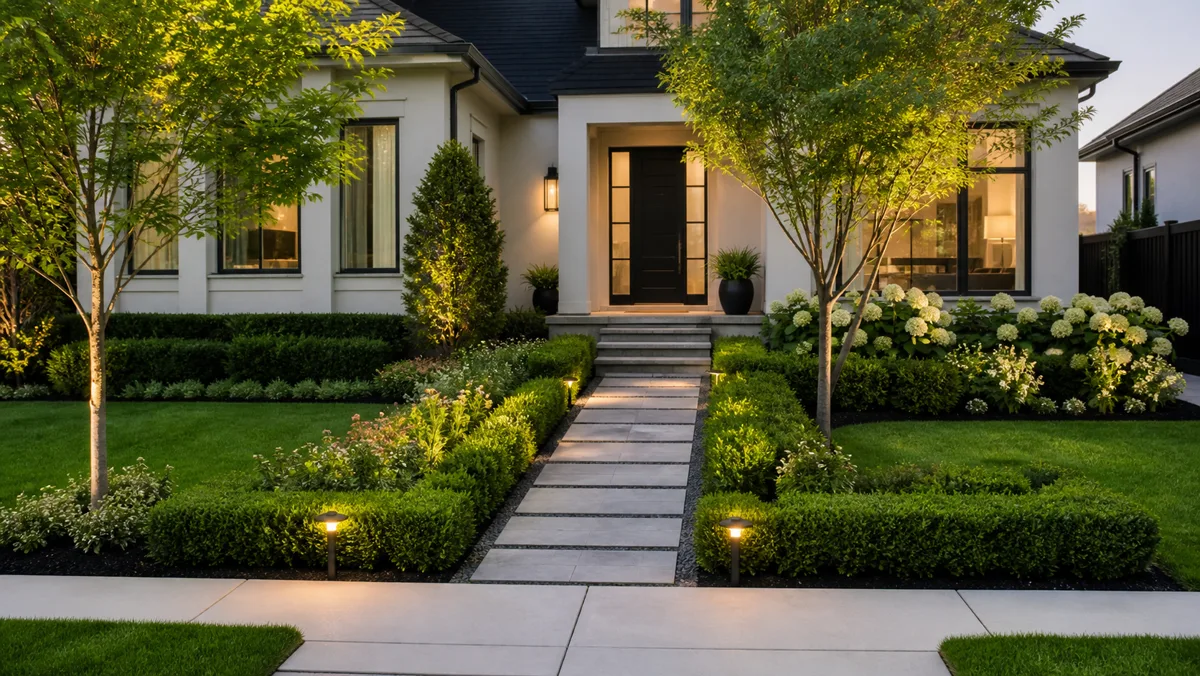
Front yard landscaping idea with a clear entry walkway, foundation planting, curb appeal lighting, and layered shrubs

Front Yard Landscaping Ideas for Better Curb Appeal

Explore front yard landscaping ideas that make the entry clearer, the house easier to read, and the curb appeal stronger. Compare walkway, foundation planting, privacy, lighting, and low-maintenance directions, then upload your front yard photo to create early AI landscape concepts.

Front Yard reference for yard area
Front Yard

0/1000 characters

Front Yard Landscaping Ideas
by Entry, Walkway, and Planting Area

Start with the area people notice or use first: the front entry, walkway, foundation beds, porch steps, driveway edge, or curb strip. Each area affects curb appeal, daily access, maintenance, and how clearly the home is seen from the street.

Front entry landscaping idea with a visible front door, clear paver path, layered shrubs, perennials, and warm entry lighting

Front Entry

Make the front door easy to find from the street, sidewalk, or driveway. Keep the door, porch, and house numbers visible, then use planting and lighting to frame the arrival.

Readable arrival

Make the main route obvious from the first view of the house.

Open sightlines

Keep the door, porch, and house numbers visible.

Warm welcome

Use planting and lighting to make the entry feel intentional.

Front yard walkway landscaping idea with a wide paver path, low planting edges, clean borders, and path lighting leading to the front door

Walkway

Use the walkway to connect the sidewalk, driveway, porch, and front door. Keep the route direct, comfortable to walk, easy to see, and wide enough for everyday use.

Clear route

Avoid confusing turns or hidden paths near the entry.

Safe edges

Use edging, planting, or lighting to reveal the walking surface.

House connection

Match the path scale and material to the front facade.

Foundation bed landscaping idea with layered evergreen shrubs, flowering shrubs, perennials, ground cover, mulch, and visible front windows

Foundation Beds

Use foundation planting to soften the house base and give the front yard year-round structure. Choose mature plant sizes that will not block windows, vents, walls, or paths.

Mature size

Choose plants for their final height and spread.

Window clearance

Keep windows, vents, and paths accessible.

Layered structure

Mix small trees, shrubs, perennials, and ground covers.

Porch and front steps landscaping idea with visible stone steps, warm step lighting, planters, low shrubs, and planting connected to the walkway

Porch and Steps

Make the porch feel connected to the yard without crowding the landing. Use planters, low shrubs, step lighting, and simple edges to reveal level changes and guide people to the door.

Step visibility

Use lighting and contrast where levels change.

Porch scale

Choose planters and shrubs that fit the porch size.

Daily access

Keep railings, doors, and landings clear.

Driveway edge front yard landscaping idea with low shrubs, ornamental grasses, gravel strip, clean edging, boulders, and clear car access

Driveway Edge

Soften the driveway with low planting, gravel strips, edging, and lighting. Keep car doors, turning space, sightlines, and the walking route clear.

Car clearance

Leave room for doors, turning, and daily movement.

Soft border

Use planting to reduce the hard edge of paving.

Night arrival

Add low lighting where people step out or turn.

Curb strip front yard landscaping idea with drought-tolerant low plants, ornamental grasses, mulch, stepping stones, sidewalk, and street edge planting

Curb Strip

Treat the curb strip or sidewalk strip as a tough, simple edge. Use durable low plants, mulch, gravel, and stepping spots so people can move from the street to the path without damaging the planting.

Durability

Choose plants that can handle street-side stress.

Access

Leave places for people to step from curb to path.

Simple care

Keep this zone easy to weed, water, and trim.

How to Choose Front Yard Landscaping Ideas
That Fit Your Home

Before you choose a front yard idea, check how it works with your home, entry route, plant size, sunlight, drainage, maintenance level, and local rules. A good design should improve curb appeal without making the yard harder to use or care for.

01

Start With the Home’s Architecture

Look at the roofline, porch, windows, materials, and front door first. The yard should support the house style instead of competing with it.

02

Make the Front Door Easy to Find

Use the main path, planting, lighting, and open sightlines to guide people from the street or driveway to the front door.

03

Plan for Mature Plant Size

Choose plants for their full-grown height and spread. Keep windows, vents, paths, walls, and house numbers clear as plants grow.

04

Check Sun, Shade, Soil, and Drainage

Notice hot walls, dry strips, deep shade, slopes, roof runoff, compacted soil, and low spots before choosing plants or paving.

05

Pick a Maintenance Level You Can Keep

Front yards are always visible, so choose plants, lawn areas, mulch, gravel, edges, and lighting that match the care you can realistically give.

06

Check Local Rules Before Big Changes

Before adding fences, walls, lighting, street trees, drainage changes, or sidewalk-edge planting, check HOA and local requirements.

Front Yard Layout Ideas
for a Clearer Entry and Better Curb Appeal

Use layout zones to decide what people should see first, where they should walk, and how the front door should feel from the street or driveway. Plan the main view, walkway, entry, foundation beds, driveway edge, and lighting before adding decorative details.

Yard Use Zone Map

Click a marker or card to see how each zone supports the yard layout.

Front yard layout idea showing the first view from the street with a visible front door, clear walkway, layered planting, and curb appeal structure

Front Yard Planting Ideas
for Year-Round Curb Appeal

Good front yard planting should support the house, not hide it. Use small trees, shrubs, perennials, grasses, and ground covers to frame the entry, soften the foundation, add seasonal color, protect key views, and keep windows, paths, and maintenance under control.

Front yard planting idea with small ornamental trees framing the house and entry, light shade over the walkway, layered shrubs, perennials, and visible windows

Small Trees for Scale and Shade

Use small or ornamental trees to frame the house, soften tall walls, and add light shade. Keep the mature canopy away from the roof, windows, foundation, and main walkway.

Front yard foundation shrub idea with evergreen shrubs, flowering shrubs, clipped hedges, perennials, mulch, visible windows, and clear walkway access

Foundation Shrubs for Year-Round Structure

Use evergreen and flowering shrubs as the stable base layer. Choose mature sizes that leave windows, vents, walls, paths, and pruning access clear.

Front yard perennial flower bed idea with repeated seasonal flowers, evergreen shrubs, flowering shrubs, small ornamental tree, clean edging, and walkway context

Perennials and Flowers for Seasonal Color

Use flowers and perennials as repeated accents within a stronger shrub and tree structure. This keeps the front yard colorful without feeling busy or random.

Front yard ground cover and lawn alternative idea with low planting, ornamental grasses, mulch, gravel, stepping stones, shrubs, and a clear entry path

Ground Covers and Lawn Alternatives

Use ground covers, mulch, gravel, ornamental grasses, or climate-fit lawn alternatives where turf is narrow, shaded, steep, dry, or hard to maintain.

Front Yard Hardscape and Lighting Ideas

Use hardscape and lighting to make the front yard easier to enter, safer after dark, and cleaner from the street. Plan the walkway, bed edges, driveway border, steps, porch, and front door lighting before choosing decorative accents.

Plan the Main Path, Edges, Steps, and Lights

Start with safe movement and clear arrival, then add curb appeal. Each path, edge, step, and fixture should have a job before you choose materials or styles.

Front yard walkway and paver hardscape idea with a clear path to the front door, low planting edges, path lights, and curb appeal

Walkways and Pavers

Use pavers, stone, concrete, gravel, or stepping stones to make the main route to the front door clear, comfortable, and consistent with the house.

Make the main route to the front door obvious

Choose a walking surface that fits daily use, drainage, and the house style

Avoid path widths or curves that feel awkward at the entry

Front yard bed edging and driveway border idea with gravel strip, low shrubs, ornamental grasses, path lights, and clear driveway access

Bed Edging and Driveway Borders

Use edging, gravel strips, low walls, or planting borders to separate beds, lawn, paving, and driveway areas so the front yard looks cleaner and is easier to maintain.

Use clean edges to make planting beds easier to maintain

Keep driveway edges clear for car doors, turns, and sightlines

Choose borders that connect to the house and walkway materials

Front yard porch steps and transition idea with visible stone steps, landing, paver walkway, planters, low shrubs, and warm step lighting

Steps and Porch Transitions

Use steps, landings, planters, and low walls to connect the walkway to the porch without hiding level changes or crowding the door.

Keep steps visible during the day and after dark

Leave landings, railings, and doors clear

Use planting to soften the transition without blocking movement

Front yard path, step, and front door lighting idea at blue hour with warm low-glare path lights, step lights, porch light, and visible entry

Path, Step, and Front Door Lighting

Use warm low-glare lighting to reveal the route, steps, house numbers, and front door without washing out the yard or shining into windows.

Light the route from driveway or sidewalk to the front door

Reveal steps and level changes clearly

Keep fixtures warm, low-glare, and focused on arrival

Front Yard Hardscape and Lighting Checks

1Make the main path to the front door easy to see from the street or driveway.
2Use edging to separate beds, lawn, gravel, and paving so the yard is easier to maintain.
3Keep steps, landings, gates, and driveway edges clear for daily use.
4Use warm, low-glare lighting on paths, steps, house numbers, and the front door.
5Avoid lighting every plant or surface; highlight only the areas that guide arrival or support curb appeal.
6Review electrical work, drainage, retaining edges, and local requirements with a qualified professional.

Front Yard Landscaping Ideas FAQ

Still have questions? Contact us.

The best front yard landscaping ideas usually improve the entry path, foundation planting, house scale, street view, bed edges, lighting, and maintenance level. Start with a clear arrival route and visible front door before adding decorative details.


Start with the view from the street, the route to the front door, and the plants, trees, driveway, porch, or walls that need to stay. Then choose one main goal, such as curb appeal, low maintenance, privacy, a clearer walkway, or better lighting.


Start with visible, practical changes: prune overgrown plants, define bed edges, add mulch, repeat a few reliable plants, keep windows visible, improve the walkway, and use warm low-glare lighting near paths, steps, and the entry.


Low-maintenance front yard ideas often use climate-fit shrubs, ground covers, mulch, gravel, simple bed edges, fewer plant varieties, and lawn alternatives for hard-to-mow areas. Choose plants for the actual sun, shade, soil, and water conditions. Low maintenance still needs pruning, seasonal cleanup, watering, and edge control.


Use plants that fit the house scale and site conditions. Small trees can frame the facade, shrubs can provide year-round structure, perennials can add seasonal color, and ground covers can reduce bare soil. Keep windows, vents, walls, paths, utilities, and house numbers accessible.


Small front yards usually work best with one clear path, compact planting, simple bed shapes, right-size shrubs, fewer focal points, and open views to the front door. Avoid oversized plants, too many materials, or small decorations that make the space feel busy.


Yes. A front yard does not need grass, but it still needs structure. Use gravel, mulch, ground covers, stepping stones, shrubs, perennials, ornamental grasses, and small trees to create clear paths, defined beds, and year-round curb appeal. Check local rules, drainage, heat, and maintenance before removing turf.


Focus on changes people notice first: clean the entry path, prune overgrown plants, refresh mulch, define bed edges, repeat a few healthy plants, update porch planters, and add simple warm lighting near the front door or walkway.


Yes. Upload a clear front yard photo to ArchOne AI, choose a yard area and landscape elements, then describe what should improve. Mention what should stay, what should change, and your main goal, such as curb appeal, walkway, foundation beds, privacy, lighting, or low-maintenance planting.


No. AI front yard concepts are for early visual exploration and communication. Final plant selection, grading, drainage, retaining walls, lighting installation, code compliance, permits, and construction details still need qualified professional review.


Front yard landscaping idea from the street view with a visible front door, clear walkway, layered planting, and curb appeal structure

Create Front Yard Landscaping Ideas From Your Photo

Upload a front yard photo and use ArchOne AI to compare early ideas for the walkway, foundation planting, hardscape, privacy, lighting, and curb appeal before you choose a direction.