

Small Living Room
Under 160 sq ft / under 15 sq m
Use small living room design ideas that protect walking paths, avoid oversized sectionals, and keep seating, storage, and visual weight compact.
Choose your cookie settings
We use necessary cookies for sign-in, security, and features you choose. Analytics, marketing services, and proactive third-party sign-in prompts that use browser identifiers load only after you consent; authentication services may load immediately when you choose to sign in. View the Cookie Policy
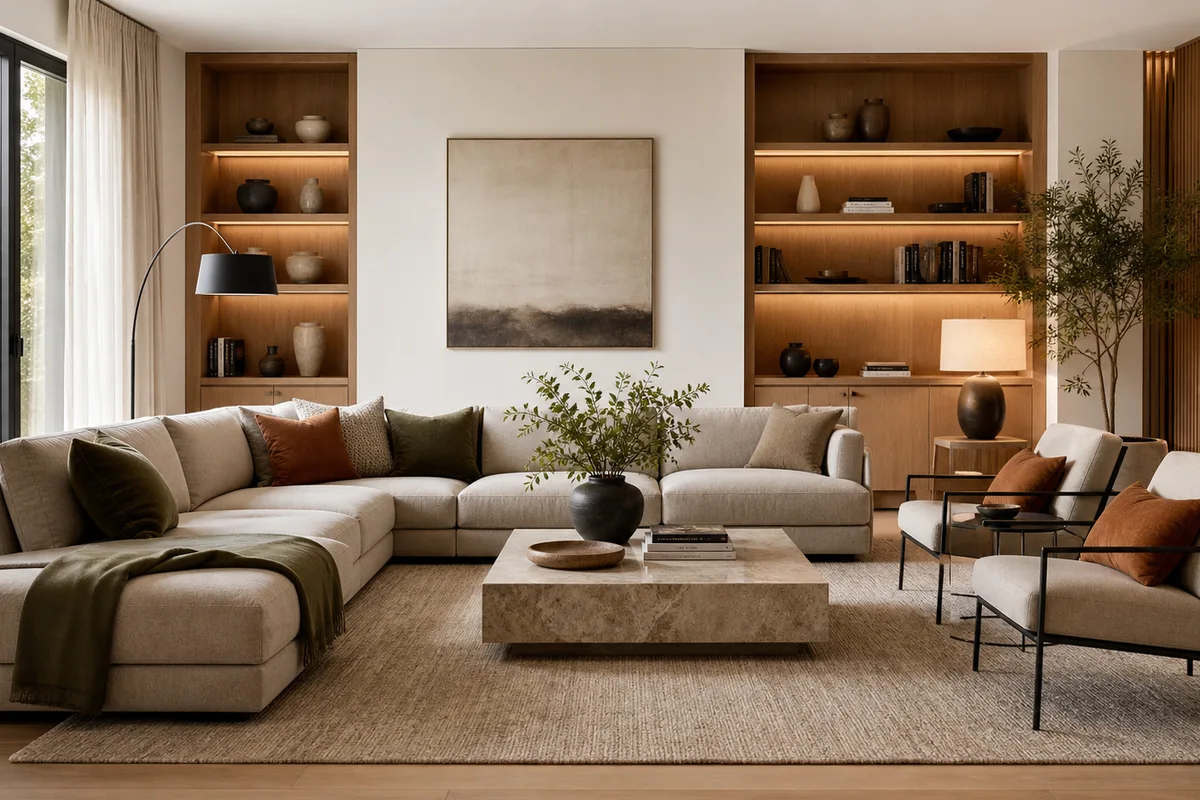
Browse living room design ideas for sofa layouts, focal walls, color, lighting, storage, materials, and decor. Save the looks, details, and room features that could work for your own living room.
Browse living room design ideas for small, medium, and large spaces. Use the closest size range to compare sofa scale, rug placement, storage, table reach, and walking paths before choosing a design direction.
Under 160 sq ft / under 15 sq m
Use small living room design ideas that protect walking paths, avoid oversized sectionals, and keep seating, storage, and visual weight compact.

160-300 sq ft / 15-28 sq m
Choose living room design ideas that balance sofa size, accent chairs, rug coverage, storage depth, and lighting zones without crowding the main path.

300+ sq ft / 28+ sq m
Look for living room design ideas that divide seating, media, reading, and conversation zones with rugs, lighting, and furniture groups instead of pushing every piece to the walls.
Compare popular living room design ideas across modern, cozy, minimal, classic, organic, and dramatic styles. Use each style to judge sofa shape, focal wall treatment, rug texture, materials, lighting mood, and decor before adapting it to your room size and daily use.
Use these checks to see whether living room design ideas can work in a real space. A strong concept should support seating, movement, focal points, lighting, storage, and daily comfort before you save or generate a variation. Once you choose a direction, use the ChatGPT interior design workflow to turn it into a room brief and clearer visual prompt.
Compare nearby living room, bedroom, and home office ideas when seating, storage, lighting, and daily routines overlap. For more detailed table, rug, chandelier, and serving-storage planning, explore these dining room ideas.

For bed wall, closet, lighting, color, textile, and layout ideas in private rooms.

For desk placement, storage, task lighting, call backgrounds, and focus-friendly room layouts.

For compact bedrooms where bed placement, wardrobes, lighting, and hidden storage matter most.

For layered textiles, rattan, warm color, plants, relaxed decor, and calmer boho bedroom concepts.
Still have questions? Contact us.
Start with how the room needs to work, not only how it looks. The best living room design ideas improve seating, movement, storage, lighting, and comfort while respecting the room size, windows, doors, and daily use.
Use compact seating, lighter window treatments, a correctly sized rug, closed storage, and fewer oversized decor pieces. Keep the main walking path clear and avoid sectionals or coffee tables that crowd the center of the room.
Choose the main focal point first, then arrange the sofa, chairs, rug, coffee table, and lamps around it. Check viewing distance, conversation flow, walking paths, and glare before saving or generating a layout concept.
Not always. In many rooms, pulling the sofa or chairs slightly inward creates a better conversation zone and helps the rug connect the seating group. Keep clear walkways behind or around the furniture when space allows.
Pick one main wall or surface color, one large furniture tone, one wood or rug support, one metal finish, and one accent. Keep the strongest color in a smaller role unless you want a bold feature wall.
Most living rooms need comfortable seating, a clear focal point, a rug or zone marker, layered lighting, practical storage, reachable tables, and enough clear path around furniture.
Yes. Upload a living room photo, choose Living Room, pick a design direction, and add notes about layout, seating, colors, lighting, storage, and what should stay unchanged. ArchOne AI can generate visual concept options from that input.
Mention the seating, focal wall, TV or fireplace, storage, rug, lighting, colors, and decor direction you want. Add clear keep and change notes, such as keep the windows, keep the fireplace, change the sofa layout, or add closed storage.
No. AI living room images are for early visual exploration and client discussion. Final dimensions, electrical work, built-ins, code issues, safety, procurement, and installation still need professional review.
Last updated: September 13, 2026

Upload a living room photo, choose a layout, color, material, or lighting direction, and turn the living room design ideas you saved into concept options for your real room.
Browse living room design ideas for small spaces, sectional layouts, media walls, fireplace zones, storage details, color palettes, and lighting moments. Use the images to compare what feels right before choosing a direction.
Use these measurements to keep living room design ideas realistic before choosing a layout or generating a concept. The living room decorating guide puts measurements, focal point, furniture, lighting, and decor into one practical decision order.
Use these as visual planning references, not construction dimensions.

Use these living room color ideas to compare warm, cool, neutral, and accent-led palettes before generating a concept. Start with a main surface color, add a furniture tone, support it with wood or textiles, then choose a metal finish and one accent. After selecting a wall direction, calculate paint for your living room walls.
Recommended Palettes
Create a Palette
Choose one starting color.
Suggested Visual Balance
Why this works
Cream and warm beige cover the largest surfaces, while oak, soft black, and a small terracotta accent add warmth without overpowering the room.
Compare fabrics, rug textures, wall finishes, wood tones, storage fronts, and lighting details before generating a concept. Choose one main material direction first, then pair simpler supporting finishes around it.
Pick one main material, then see which quiet materials and accent details pair well with it.
Choose the surface or finish people notice first.


These calm the room and support the main material.


Use these in small doses for warmth, contrast, or rhythm.


Use layered lighting to shape living room design ideas for conversation, reading, media, display, and evening mood. Start with soft ambient light, then add task, accent, and decorative fixtures before generating a concept.
Use the four lighting layers to judge what each fixture should do, then combine them so the living room works throughout the day and evening.

Use ambient lighting as the base layer that keeps the whole living room readable and comfortable.
Keep the room softly lit before adding feature lamps
Use warm white light around 2700K-3000K for a comfortable living room mood
Use dimming so media, conversation, and evening mood can shift
Avoid one harsh ceiling fixture as the only light

Task lighting should reach reading chairs, side tables, desks, or game tables without lighting the whole room too brightly.
Place floor or table lamps where people actually read
Check glare on screens before placing lamps near a media wall
Use separate controls for reading and general light

Accent lighting adds depth by highlighting shelves, art, wall texture, plants, or media storage.
Highlight only a few features so the room stays calm
Use warm shelf or wall light to add evening depth
Keep accent lighting secondary to comfort and movement

Decorative lighting gives the room scale and style, but fixture shape should still support the seating layout and daily use.
Use floor lamps, pendants, or sculptural table lamps for style after the functional layers are covered
Check fixture height, glare, and sightlines near the TV
Let the fixture support the room style instead of competing with every surface


