

Wall Storage Entry
Best when you have one usable wall but not enough depth for a bench or console. Keep shoe drawers shallow and hooks off the door swing.
Choose your cookie settings
We use necessary cookies for sign-in, security, and features you choose. Analytics, marketing services, and proactive third-party sign-in prompts that use browser identifiers load only after you consent; authentication services may load immediately when you choose to sign in. View the Cookie Policy
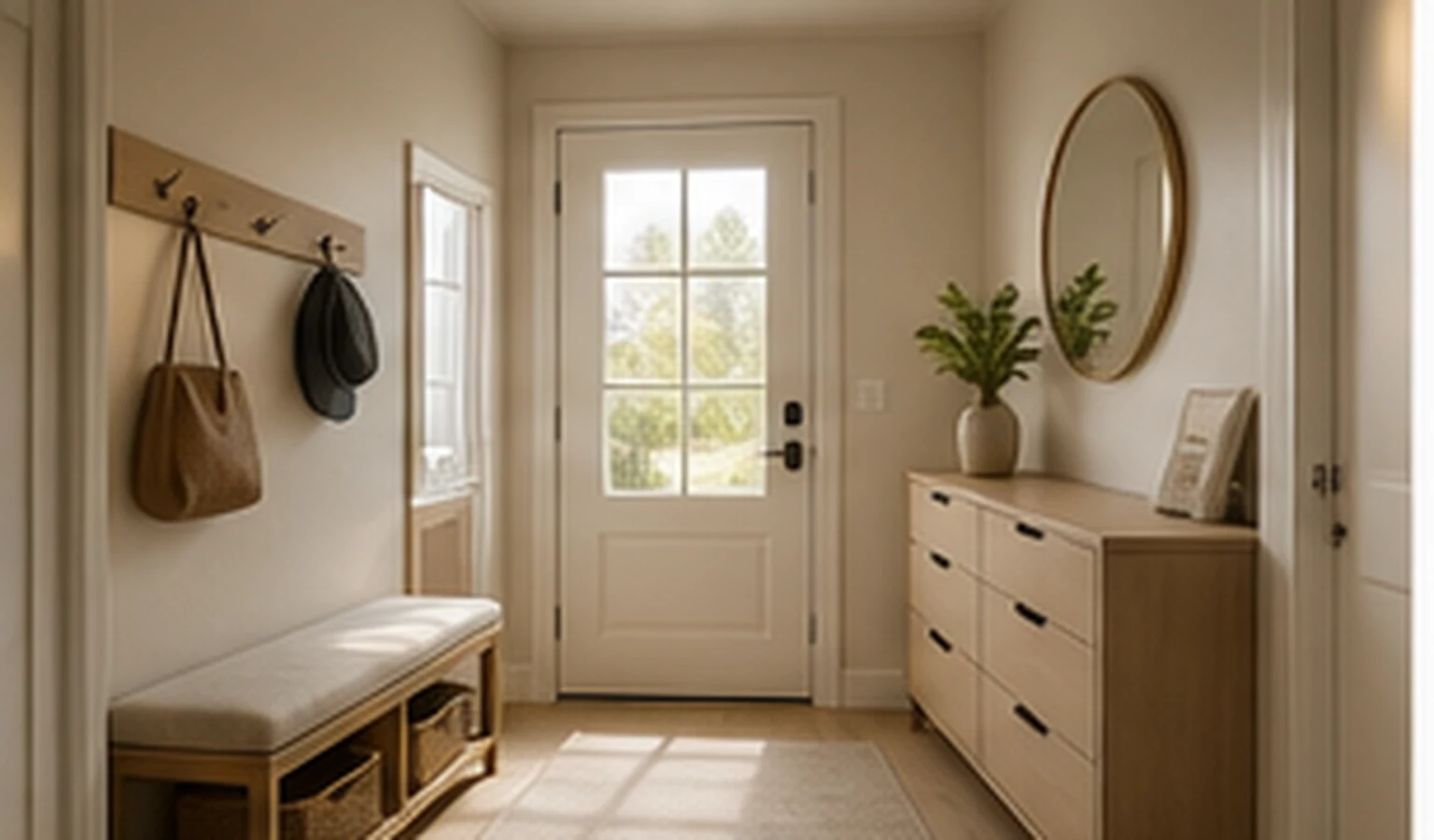
Turn a tight entrance into a clearer drop zone with small entryway ideas for shoe storage, hooks, a mirror, better lighting, and a path that still feels open.
Use these small entryway ideas to decide where shoes, coats, bags, and keys should live before choosing furniture. Start with the door swing and walking path, then pick the storage wall, bench, narrow-hall, corner, or mudroom setup that fits your real entry.
Best when you have one usable wall but not enough depth for a bench or console. Keep shoe drawers shallow and hooks off the door swing.

Best when people need to sit for shoes, bags, or kids' gear. Choose a shallow bench and check that the path still feels open.

Best for long tight entries where storage should stay wall-mounted or very shallow. Keep the runner flat and leave the center path open.

Best when only a small corner is available near the door. Keep hooks, shoes, and trays contained so the corner does not become clutter.

Best for busy homes with enough wall width for cubbies, a bench, and hooks. Use it only if gear stays contained and the path remains clear.
Use these small entryway ideas to solve your main bottleneck near the door: closed shoe storage, a compact drop zone, or wall-mounted storage that adds function without taking over the walking path.
Use small entryway ideas for light surfaces, controlled contrast, and layered lighting to make a tight entry feel cleaner and easier to read without ignoring durable floors, hooks, and daily traffic.
Review these small entryway ideas before buying furniture, ordering storage, or changing finishes. A good small entryway should make daily arrivals easier, not just look more styled.
Compare narrow entry, mudroom, and laundry spaces that share hooks, shoe storage, wet gear, and daily traffic. If the space is not limited to a narrow entrance, compare the broader entryway layout ideas here.

For front-door storage, benches, mirrors, rugs, lighting, and a clearer first impression.

For garage entries, shoe zones, hooks, benches, lockers, wet gear, and daily drop-zone storage.

For tight laundry spaces that also handle baskets, cleaning supplies, pet items, or garage traffic.

For washer dryer layouts, cabinets, hampers, folding space, sinks, and utility-room storage.
Still have questions? Contact us.
The best small entryway ideas solve the daily problems first: shoes on the floor, coats with no hook, bags without a landing place, weak lighting, and a path that feels blocked. Start with the door swing and one clear walking path, then add shallow shoe storage, wall hooks, a mirror, durable flooring, and a bench or console only if it fits.
Decorate after the storage plan is clear. Small entryway ideas work better when you use one mirror, one small tray or bowl, one runner, and one simple accent instead of filling every surface. Keep most shoes and daily items closed or contained, then let hooks, lighting, hardware, art, or a plant add style without turning the entry into another drop zone.
Most small entryways need a place for shoes, coats, bags, keys, and one final check before leaving. The most useful small entryway shoe storage ideas usually include shallow shoe drawers, under-bench cubbies, hooks or a peg rail, a mirror, a washable mat or runner, and a small tray for keys and mail. Do not force every piece if the doorway or walking path gets tight.
Create a small entry zone on one wall or in one corner. Small entryway ideas like a hook rail, narrow shelf, slim shoe drawers, mirror, and washable mat can define the area. If the front door opens directly into a living room, use a runner, storage cabinet, or wall color change to mark the entry without building a physical divider.
Make the entry work like a small daily system. Keep the door swing clear, give shoes a shallow cabinet or under-bench cubby, add hooks where coats and bags naturally land, use a tray for keys and mail, and light the threshold and mirror. Move seasonal coats, extra shoes, packages, and overflow items somewhere else so the entry does not become storage for the whole home.
Keep daily shoes close to the door but not fully exposed. Use tilt-out shoe drawers, a slim shoe cabinet, under-bench cubbies, baskets, or a small boot tray for wet shoes. Store only the pairs used every day in the entry and move seasonal or extra shoes to a closet so the doorway stays clear.
Choose based on the main task. A bench helps if people sit to put on shoes or handle kids' gear. A slim console helps if the entry mainly needs a surface for keys, mail, a lamp, or a small tray. Use both only when the door can still open freely and one clear path into the home remains open.
Use lighter walls, shallow storage, fewer visible shoes, a mirror, and layered lighting. Small entryway ideas that keep the largest surfaces calm help the door area reflect more light, then use contrast only on small details such as hooks, hardware, a mirror frame, or the front door. A flat runner and visible floor space usually make the entry feel larger than adding more furniture.
Yes. Upload a clear entryway, foyer, hallway, or front-door photo and add notes about what should stay, such as the door, closet, floor, stairs, or wall openings. Use the result to compare visual directions for storage, hooks, bench placement, color, lighting, and materials. Treat the images as early concepts only; final dimensions, electrical work, accessibility, code compliance, product selection, and installation still need qualified professional review.
Last updated: July 8, 2026

Upload your entryway photo and compare storage, bench, lighting, color, and layout directions while keeping your real door, walls, and walking path in view.
Compare small entryway design ideas that control shoes, bags, coats, lighting, and daily clutter while keeping the doorway and walking path open. Use these small entryway storage ideas, small entryway decor ideas, tiny entryway ideas, and narrow entryway ideas to decide what should stay open, what can move to the wall, and what belongs behind closed storage.

Small entryway ideas for shoes work best when shallow closed storage comes first, with only a few daily pairs visible in open cubbies or baskets.

A useful drop zone gives bags, coats, keys, and mail a landing place while keeping the door swing and walking path clear.

Wall storage works when the floor is tight because it adds hooks, shelves, and a landing surface without using the main walking path.

Small entryway ideas for a lighter look should keep the largest surfaces quiet: walls, trim, storage fronts, and floor tones should work together so the entry reflects more light and feels less busy.

Use dark contrast where it sharpens the entry, not where it makes the whole space feel heavy. Hooks, hardware, mirror frames, or the door can carry the darker note.

Good small entryway lighting should make the threshold, mirror, storage, and walking path readable after dark.