

Full Bathroom
40-70 sq ft / 3.7-6.5 sq m
Use this range to balance a vanity, toilet, tub or shower, storage, and mirror lighting without crowding the main path.
Choose your cookie settings
We use necessary cookies for sign-in, security, and features you choose. Analytics, marketing services, and proactive third-party sign-in prompts that use browser identifiers load only after you consent; authentication services may load immediately when you choose to sign in. View the Cookie Policy
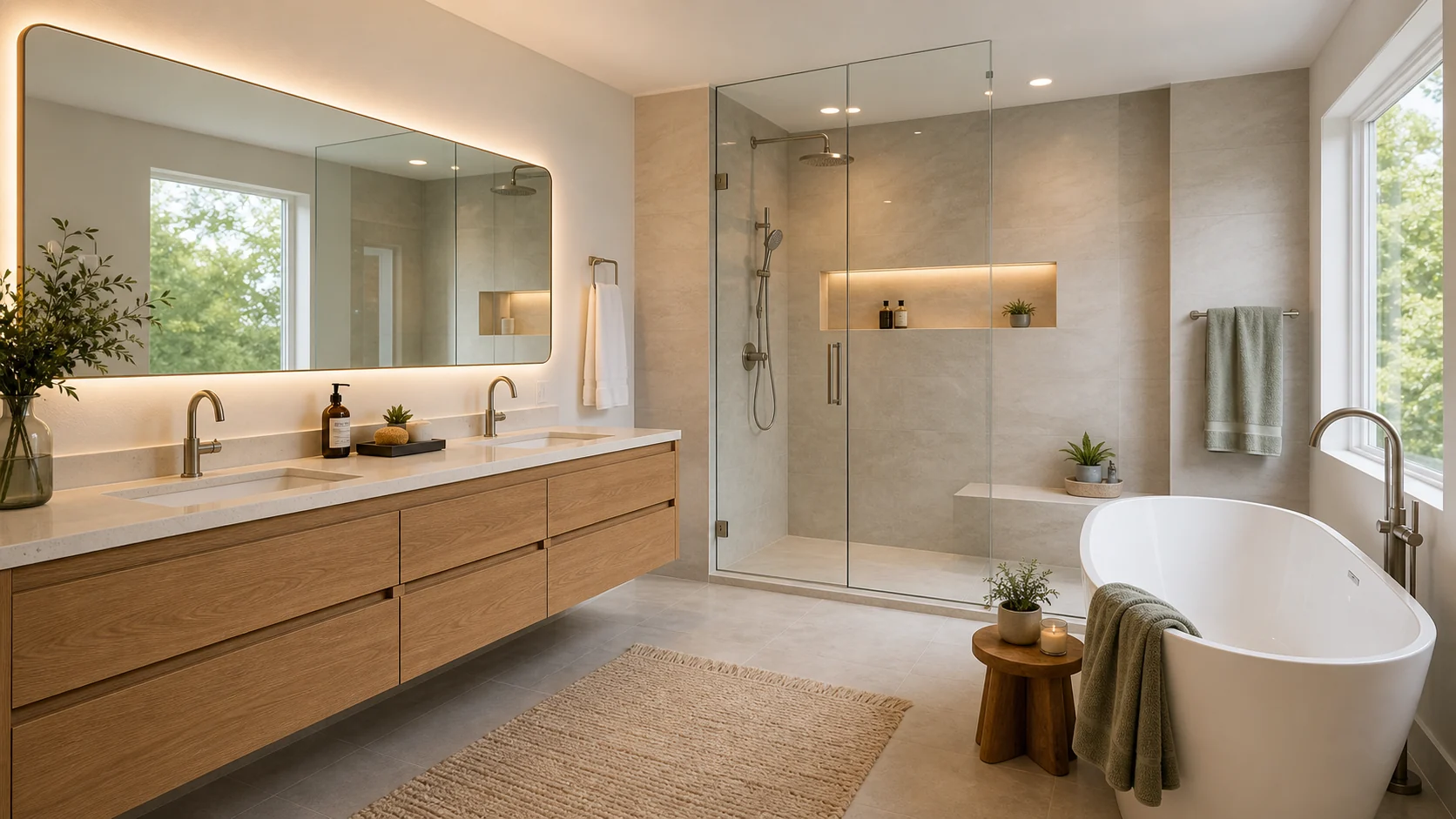
Browse bathroom design ideas for layouts, vanities, tile, color, lighting, storage, and materials. Save the looks, details, and room features that could work for your own bathroom.
Bathroom size affects vanity depth, shower comfort, toilet clearance, storage, and door swing. Use the closest size range to find bathroom design ideas that fit your room.

25-40 sq ft / 2.3-3.7 sq m
Focus on clear door swing, compact vanity depth, toilet clearance, and a shower layout that does not block daily movement.
Explore Small Bathroom Design Ideas40-70 sq ft / 3.7-6.5 sq m
Use this range to balance a vanity, toilet, tub or shower, storage, and mirror lighting without crowding the main path.

70+ sq ft / 6.5+ sq m
Look for layouts that can support a larger vanity, better storage, a comfortable shower, and optional tub space when the room allows.
A bathroom style helps guide tile size, vanity finish, mirror shape, lighting, color, and fixture finish. For cleaner lines, floating vanities, frameless showers, and calmer material palettes, explore our modern bathroom design ideas. If you prefer warmer wood, painted wall detail, shaker vanities, and softer lighting, see these farmhouse bathroom ideas.
 Open Modern Bathroom Design Ideas


 Open Modern Farmhouse Bathroom Design Ideas
Use these checks before you commit to a bathroom design direction. A strong idea should fit your fixtures, handle moisture, add storage, improve lighting, and stay easy to clean.
Compare nearby bathroom, bedroom, and small-space ideas when layout, storage, lighting, and material choices overlap.

For tight bathrooms where vanity size, shower layout, tile, lighting, and storage must work harder.

For clean-lined vanities, glass, tile, lighting, and calm modern bathroom material palettes.

For bed wall, closet, lighting, color, textile, and layout ideas in private rooms.

For compact bedrooms where bed placement, wardrobes, lighting, and hidden storage matter most.
Still have questions? Contact us.
Start with fit, not style. Check the vanity, toilet, shower, tub, door swing, storage, and lighting. Then choose ideas that work within those limits.
Use a lighter palette, a compact or floating vanity, clear shower glass, recessed storage, and fewer finish changes. Small bathrooms need clarity before decoration.
Choose tile by zone. Shower walls, floors, backsplashes, and feature walls have different needs. Choose floor tile rated for the wet area. Use fewer grout lines where cleaning matters, and start with one main tile before adding pattern.
Let one surface lead: the walls, tile, vanity, or floor. Support it with quiet neutrals, one metal finish, and a small accent. Warm white, soft stone, muted blue, sage, oak, and brushed metal are easy starting points.
Check the vanity width, depth, sink position, storage, mirror, and lighting. A floating vanity can make a small room feel lighter. A larger vanity can provide more closed storage.
Check the toilet centerline, space in front of fixtures, shower size, vanity depth, door swing, sink spacing, and shower clear height. Standard residential and accessible layouts use different rules. Verify every final dimension against local code and product instructions.
Good starting points include porcelain tile, quartz, shower glass, and durable vanity finishes. They resist water, are easier to clean, and work with many styles.
Yes. Upload a bathroom photo to ArchOne AI, choose the bathroom room type, pick a style, and add notes about tile, vanity, color, lighting, storage, and what should stay unchanged. This helps turn bathroom design ideas into options for your actual room.
No. Use these ideas for early visual direction. Plumbing, electrical work, waterproofing, ventilation, accessibility, code, and installation need qualified professional review.
Last updated: September 15, 2026

Upload a bathroom photo, choose a design direction, and turn the bathroom design ideas you saved into a clearer concept for your room.
Browse 23 bathroom photos and visual examples for small spaces, remodels, tile, modern style, decor, showers, vanities, and storage. Use the filters to narrow this picture gallery to the ideas that match your room and project.

Use your own bathroom photo to explore a similar style, material palette, or storage direction in ArchOne AI.
Start with realistic fixture spacing. The code values below are U.S. reference points. Other numbers are planning ranges, not universal rules. Always check local codes, product instructions, plumbing, and accessibility needs.
Use these as visual planning references, not construction dimensions.

Bathroom color works best when one surface leads and the others support it. Use these palettes to balance tile, vanity, wall color, metal finishes, and accents. For dry painted walls, estimate the paint quantity after confirming the wall area and product coverage.
Recommended Palettes
Create a Palette
Choose one starting color.
Suggested Visual Balance
Why this works
Warm white and limestone keep the room light. Oak and brass add enough warmth, while soft sage keeps the palette relaxed.
Choose bathroom materials that can handle water, humidity, cleaning, and daily use. Let one surface lead, such as the tile, vanity, counter, or shower glass. Keep the other finishes quieter.
Pick one main material. Then pair it with quiet finishes and a few accent details.
Choose the surface or finish people notice first.


These calm the room and support the main material.


Use these in small doses for warmth, contrast, or rhythm.


Layered lighting helps a bathroom work for grooming, showering, cleaning, and relaxing at night. Start with task lighting at the mirror, then add ambient, accent, and decorative fixtures.
Use the four lighting layers to judge what each fixture should do, then combine them so the bathroom works in the morning and at night.

Use soft general light so the bathroom feels safe, even, and easy to clean.
Avoid relying on one harsh ceiling light
Use dimming or separate controls for morning and evening use
Check rated fixtures for shower, tub, or wet-zone locations

Use balanced mirror lighting so faces are clear without harsh shadows.
Use side lights, vertical bars, or a diffused mirror light when possible
Avoid a single downlight directly above the face
Choose flattering light with good color rendering for grooming

Use accent lighting to highlight one or two details, such as a niche, tile wall, shelf, or tub zone.
Keep accent light subtle and lower than task light
Use accent lighting after mirror and safety lighting are solved
Place it on a separate control when possible

Use decorative fixtures for style, but do not let them replace task or safety lighting.
Use sconces, pendants, or small decorative fixtures where scale allows
Keep decorative fixtures out of risky wet zones unless properly rated
Check glare, door swing, mirror clearance, and local code before choosing placement