
Current Details
Furniture, lighting, art, and color can make a room feel current without changing every surface. Keep the architecture and larger pieces that still work.
Choose your cookie settings
We use necessary cookies for sign-in, security, and features you choose. Analytics, marketing services, and proactive third-party sign-in prompts that use browser identifiers load only after you consent; authentication services may load immediately when you choose to sign in. View the Cookie Policy
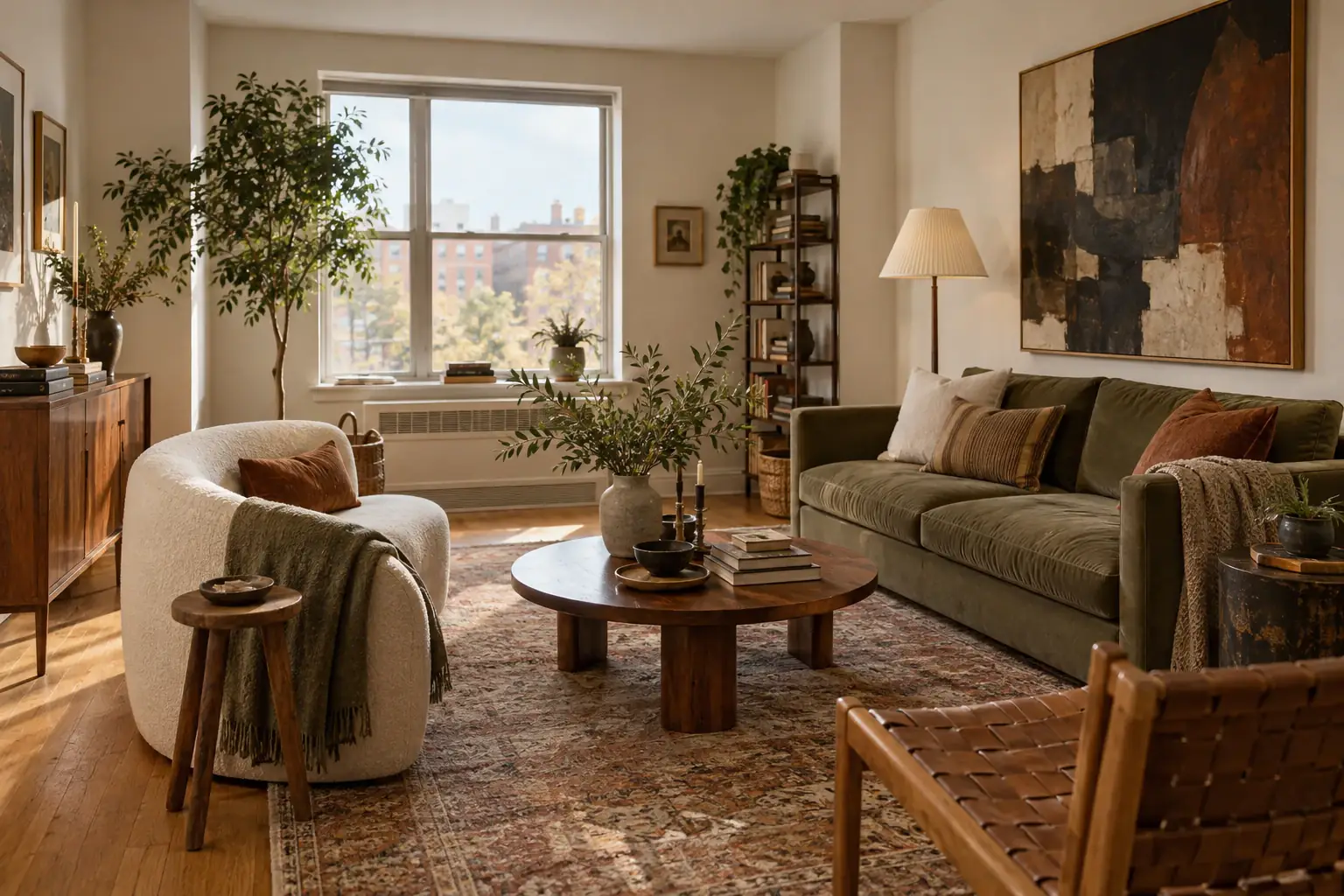
Compare 8 ways to make a living room feel warm, current, and personal. Find ideas for small rooms, open plans, and existing furniture, then try one with your room photo.
By ArchOne AI Team · Updated
Browse the 8 IdeasContemporary design reflects how people live now. It is not tied to one historical period or a fixed set of rules. In a living room, the look comes from a clear layout, a thoughtful mix of old and new, and a few current details that add warmth and personality. Compare the 8 ideas below.
Furniture, lighting, art, and color can make a room feel current without changing every surface. Keep the architecture and larger pieces that still work.
Pair straight lines with softer forms, smooth surfaces with tactile materials, or new pieces with vintage ones. Repeat a color or material to make the mix feel connected.
Keep walking paths clear and choose seating for real use. Add art, books, or meaningful objects so the room feels personal and lived in.
Modern design draws from established twentieth-century movements. Contemporary design reflects the present and can combine ideas from different periods. The two often overlap. Compare the same room below to see how furniture, color, materials, and personal objects change the look.

Draws from twentieth-century movements such as Bauhaus, Scandinavian modernism, and mid-century modern.
Reflects current design and can borrow from modern, traditional, vintage, and other periods.
Often uses clean geometry, slim profiles, and functional forms.
May combine clean lines with softer, sculptural, or more expressive forms.
Usually follows a more consistent set of historical references.
Can combine new, modern, vintage, traditional, and handmade pieces.
Often uses a restrained, coordinated palette that supports the furniture and architecture.
May stay neutral or introduce stronger color through art, textiles, or one focal piece.
Often presents wood, leather, glass, and metal in simple, functional forms.
Often contrasts smooth with tactile, refined with handmade, or new with old.
Often uses fewer decorative objects, although art and personal pieces can still be focal points.
More readily mixes art, books, and personal collections with furniture from different periods.
Its historical references stay recognizable when the room is updated.
Its details can change as current design and the way people live evolve.
Modern
Draws from twentieth-century movements such as Bauhaus, Scandinavian modernism, and mid-century modern.
Contemporary
Reflects current design and can borrow from modern, traditional, vintage, and other periods.
Modern
Often uses clean geometry, slim profiles, and functional forms.
Contemporary
May combine clean lines with softer, sculptural, or more expressive forms.
Modern
Usually follows a more consistent set of historical references.
Contemporary
Can combine new, modern, vintage, traditional, and handmade pieces.
Modern
Often uses a restrained, coordinated palette that supports the furniture and architecture.
Contemporary
May stay neutral or introduce stronger color through art, textiles, or one focal piece.
Modern
Often presents wood, leather, glass, and metal in simple, functional forms.
Contemporary
Often contrasts smooth with tactile, refined with handmade, or new with old.
Modern
Often uses fewer decorative objects, although art and personal pieces can still be focal points.
Contemporary
More readily mixes art, books, and personal collections with furniture from different periods.
Modern
Its historical references stay recognizable when the room is updated.
Contemporary
Its details can change as current design and the way people live evolve.
Use the same room photo and compare:
Furniture · Color · Materials · Art · Existing features
Choose Modern if you prefer a consistent twentieth-century design language. Choose Contemporary if you want a more flexible mix that can change with your space and daily life.
A contemporary living room does not require a full remodel. Start with the parts that make the room work: clear walking paths, comfortable seating, useful storage, and a layout that suits daily life. Then refresh the look with easier-to-change elements such as lighting, artwork, rugs, and accent furniture.
If a large piece is the wrong size or blocks circulation, fix that first. New accessories will not solve a layout problem.
A style name is not enough. Explain how you use the room, what must stay, what you want to change, and what the concept should avoid. Keep the first brief focused. Compare one or two changes at a time.
Keep the windows, fireplace, wood floor, sofa, and TV location. Support conversation and TV viewing while keeping the path to the kitchen clear. Try softer seating shapes and warmer wood and textiles. Avoid an all-gray palette and oversized furniture.
The same design idea can improve one room and overwhelm another. Start with what shapes your space most: an existing sofa, a fixed architectural feature, limited floor area, or an open-plan connection. Then choose changes that work with it.

Use the existing floor as part of the color and material palette. Repeat one of its tones in the rug, artwork, or smaller furniture. Before designing around a sofa, check that its size and position leave a clear walking path.
Check first: Does the sofa fit the room, or is it causing the layout problem?

Keep the strongest original feature visible. Add contrast with cleaner furniture, larger artwork, or one distinctive light. Decide whether the feature should remain the focal point or share attention with a TV or view. Have permanent changes reviewed by qualified professionals.
Check first: What should people notice when they enter the room?

Keep the main walking path and access to doors and windows clear. Choose fewer pieces at the right scale. Use one artwork, shape, or color as the focal point. Furniture can sit against a wall when floating it would waste space.
Check first: Which pieces are essential for comfort, storage, or daily use?

Give the living area a clear center with a rug, seating group, fireplace, TV, or view. Repeat one or two colors or materials in the dining area or kitchen. Keep the routes between each zone clear.
Check first: What should separate the living area, and what should connect it to the surrounding space?
Inspiration images show a look, but they do not account for your room, existing features, or daily needs. Use the same room photo and a focused brief to compare ideas for your own space.
Choose one or two images. Note exactly what you like: the seating shape, artwork, contrast, materials, or connection between spaces. Use each image as a guide, not something to copy.
Upload a room photo, sketch, or render. Add how the room is used, what must stay, what you want to change, and what the concept should avoid.
Create a concept for the same room and brief. To compare another direction, change one main element, such as furniture shape, color, or material. Keep the rest consistent.
Check whether the concept follows your brief, keeps the important room features, and improves the layout and mood. Refine one change at a time.
Get clear answers about contemporary style, colors, furniture, small rooms, and using AI to explore your space.
Contemporary living room design reflects current ideas rather than one fixed historical period. It can combine modern, minimal, traditional, vintage, organic, or handmade elements. The result should feel current, comfortable, and suited to how the room is used.
Modern design comes from defined twentieth-century design movements. Contemporary design reflects what feels current now, so it changes over time and can borrow from several periods. The two may share clean lines and simple forms, but they are not the same style.
Start with warm white, cream, taupe, soft gray, or natural wood. Add contrast with black, deep blue, olive, rust, or one stronger color. Keep the palette focused and repeat key colors across the rug, art, textiles, and furniture so the room feels connected.
Choose comfortable furniture with simple forms and proportions that suit the room. One or two curved or sculptural pieces can add character. Use simpler supporting pieces to keep the layout balanced. Check dimensions, walkways, seat depth, and table height before you buy.
Combine comfortable seating with wood, textured fabrics, rugs, curtains, art, and layered lighting. Use lamps near the places where people read, relax, or talk. These elements add warmth without making the room feel cluttered.
Keep routes to doors and windows clear. Choose fewer pieces that fit the available floor area, and use one strong shape, artwork, or accent color as the focal point. Avoid oversized furniture or layouts that leave too little room to move.
Yes. A vintage table, inherited cabinet, traditional fireplace, or older rug can add character beside newer, simpler pieces. Repeat a color, material, or shape to connect the mix. Leave enough space for the most important pieces to stand out.
Start by rearranging the furniture and listing the pieces you want to keep. Then test one or two changes, such as a larger rug, better lighting, new art, updated textiles, or a smaller table. Replace a major item only when its size, condition, comfort, or function no longer works.
Upload a clear photo of your living room and note the furniture, windows, doors, and fixed features you want to keep. Describe one direction to test, such as warmer materials, softer shapes, or bolder art. Compare the early concepts and refine one major change at a time.
An AI concept can help you compare furniture shapes, color palettes, materials, and how the room comes together before you buy. It cannot confirm exact fit, product availability, construction details, or code compliance. Measure the room and review technical decisions with qualified professionals before purchasing or building.
Last updated: October 13, 2026

Upload a photo of your living room. Tell ArchOne AI what to keep and what you want to change. Compare contemporary concepts for furniture, color, materials, and lighting before you buy or update anything.
Free credits are available. Use the results for early concept exploration, and verify dimensions and technical details before implementation.
Each idea shows a different way to make a living room feel contemporary. Open any image to see where it works best, what to keep or change, and what to check before trying the idea in your own space.